
Ribadesella
View Screen
View Web
bg1

CUEVES DEL AGUA CUEVONA (big cave)
Description

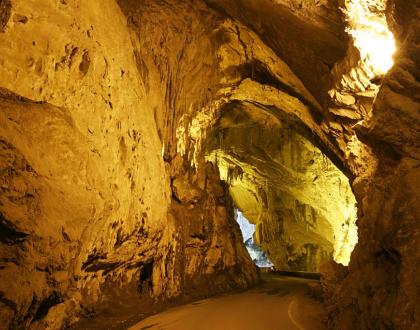
This 300 m long cavern is the only access the picturesque Cueves del Agua village has ever had. Its enormous gallery is the ancient course of Cueves stream whose modest waters are still visible running beside the road. Dramatically lighted with distant lightning points the different cave formations inside –stalactites, stalagmites, columns- create a strongly moving atmosphere that will make your experience an unforgettable perception of ground and nature. Actually, Cueves del Agua Cuevona is one of the most visited sites in the region. 
View map

Old village

Description

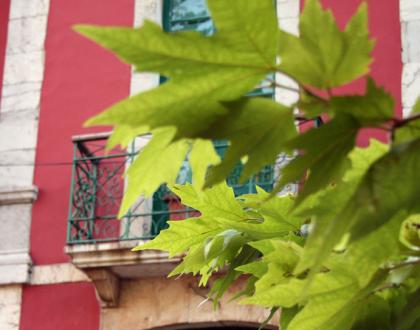
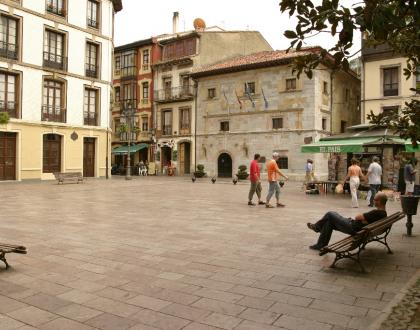
To find the oldest part of this village you have to stroll through the streets and alleys that are standing at the bottom of the hills, for this was Ribadesella’s original settlement. Walking along the Oscura street or climbing up Trasmarina alley you will get to El Portiellu quarter, a good place to start your visit. Always been a popular neighbourhood, El Portiellu represents the southern limit of the old village and, in fact, it is the natural entrance to Ribadesella.

View map

EL CARMEN LOCAL MUSEUM

Description

Originally, this museum was an old rural school built in 1900, and it stands as a paradigmatic example of what the hygiene movement gave to public buildings at that time: from that moment, big windows and high ceilings dominate the basic structure of the new built schools. 
Today this building works as a local museum, and two permanent collections are exhibited inside.
Originally, this museum was an old rural school built in 1900, and it stands as a paradigmatic example of what the hygiene movement gave to public buildings at that time: from that moment, big windows and high ceilings dominate the basic structure of the new built schools. 
Today this building works as a local museum, and two permanent collections are exhibited inside.

View map

San salvador de moru romanesque church

Description

San Salvador de Moru is a modest 13th century construction in Romanesque style that was burned in 1936, during the Civil War. In the burning, the wooden roof of the unique nave collapsed, but not the pointed vault of its chancel that was built in stone. And so, the fire extremely heated the chancel’s ceiling and at some spots its lime cover got detached. And amazingly, never seen before unexpected paintings appeared there. 

View map

L’infiernu cliffs and picnic area

Description

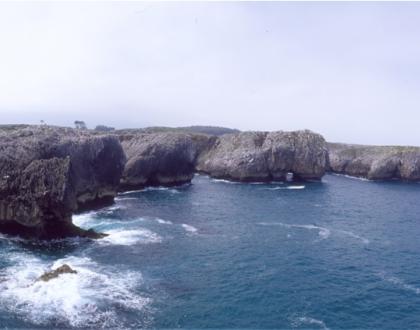
L’Infiernu picnic area is a recreational zone on the countryside, beside the coastline. From this area a short trail to the north take you to L’Infiernu stony cliffs, with their dramatic soaring walls in front of the vast surface of the Cantabrian Sea. A good option there, is to do a little hiking by the linecoast at the top of the cliffs for enjoying the mixed sea/mountain wonderful landscape.

View map

Castru arenes cliffs and picnic area – the bufones

Description

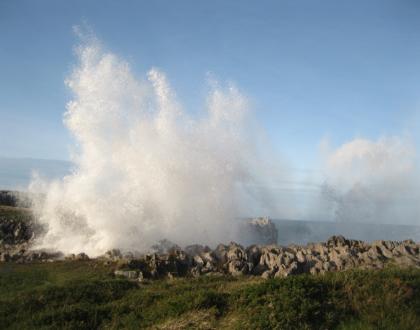
Castru Arenes picnic area is a vast nude surface at the top of a magnificent calcareous platform, actually a privileged viewpoint to look over the Cantabrian Sea. El Cuera Mountains behind you, and the beautiful Guadamia beach, deep on your right, complete this unforgettable scene. Looking to the east side, separated from you by the gorge at the mouth of Guadamía stream, you have the massive and highly dramatic cliffs where the Bufones get active. 

View map

El malecón park and birding area

Description

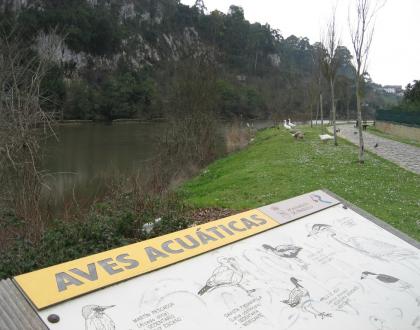
This natural area is an interesting remaining of a biologically rich vast wetland that was partially dried and filled during the 20th century. Twice a day Cantabrian sea high tides flood this marsh, producing a high valuable ecosystem of specific Flora and Fauna species, including long-legged and wading birds as eventual visitors. Each year at the end of the summer, herons, cormorants, sandpipers and other migratory birds come from the north and stop at this natural environment to have an indefinite stop on their trip to the south.

View map

Sella river winners’ promenade – les piragües festivity

Description

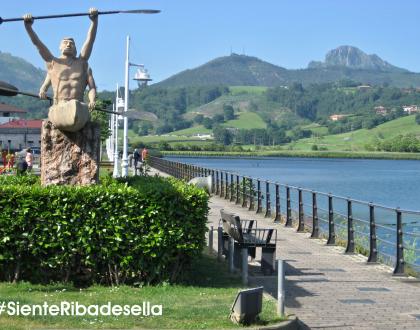
Les Piragües Festivity is the only celebration in Asturias declared as an International Interest Celebration by the Asturias government. Folk, tradition and sport are part of this renowned mass party whose main event is the Sella River’s International Canoeing Descent. 

View map

Santa maría de xuncu romanesque church

Description

Xuncu village is the outstanding location of this rural stone church, at 5 km from Ribadesella. It offers a whole view over the estuary of the Sella River, and the Escapa mountains, with Mofrechu Peak as the highest summit in the district, soaring 891 m. 

View map

Santa maría magdalena parish church – uría-aza brothers’ fresco paintings

Description

Built during the 20s decade, Santa María Magdalena parish church was projected in an eclectic style by the main architect in Ribadesella at the time: Miguel García-Lomas. Two distinctive bell towers and soft elements of country, colonial and Neoromanesque styles are visible on its structure. 
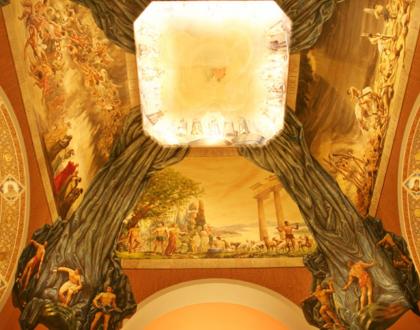
However, at the interior, the fresco paintings made by three local artists –Bernardo, Antonio and Celestino, the Uría-Aza brothers- during the 30s and 50s decades, are the ‘worth it’ thing of the church, and definitely justify a quiet and observant visit. 
Built during the 20s decade, Santa María Magdalena parish church was projected in an eclectic style by the main architect in Ribadesella at the time: Miguel García-Lomas. Two distinctive bell towers and soft elements of country, colonial and Neoromanesque styles are visible on its structure. 
However, at the interior, the fresco paintings made by three local artists –Bernardo, Antonio and Celestino, the Uría-Aza brothers- during the 30s and 50s decades, are the ‘worth it’ thing of the church, and definitely justify a quiet and observant visit. 

View map

Pages

Subscribe to Turismo Ribadesella RSS
en